Ivanhoe Atlantic CEO Bronwyn Barnes Resigns Amid Rail, Regulatory, and Geopolitical Pressures
Ivanhoe Atlantic CEO Steps Down as Iron Ore Projects Face Rail Access and Guinea Regulatory Challenges
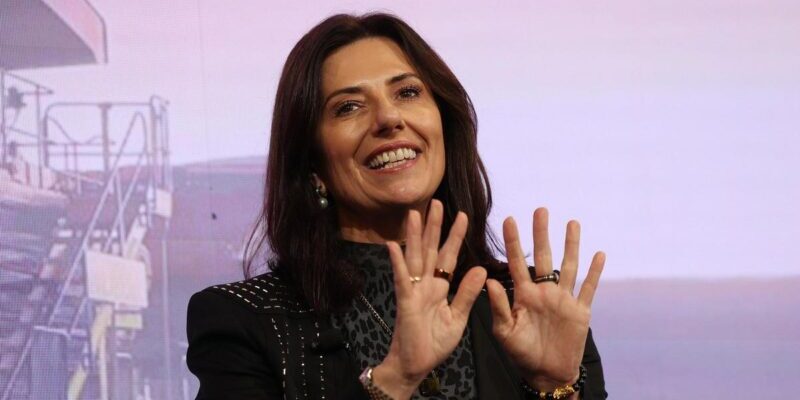
Bronwyn Barnes, President and Chief Executive Officer of Ivanhoe Atlantic, has resigned after four years leading the Liberian- and Guinean-focused iron ore developer. The company is majority-owned by U.S.-Canadian billionaire Robert Friedland.
Her departure comes at a time when Ivanhoe Atlantic is navigating a complex mix of infrastructure constraints, regulatory hurdles, and heightened geopolitical scrutiny.
Ivanhoe Atlantic’s export strategy is heavily dependent on access to Liberia’s Yekepa–Buchanan rail corridor, which connects the Mount Nimba iron ore deposits to the Atlantic coast.
The railway is operated by steelmaker ArcelorMittal, Liberia’s largest private employer, which has expanded its own mining operations in Yekepa.
Although Liberia’s legislature has approved a framework allowing multiple users on the rail corridor, ArcelorMittal’s expansion could constrain available capacity, raising uncertainty over Ivanhoe Atlantic’s long-term access to the line.
In neighboring Guinea, the company faces additional regulatory and logistical challenges. The Mount Nimba deposit lies close to the Mount Nimba Strict Nature Reserve, attracting environmental and social scrutiny that has slowed permitting and approvals.
At the same time, Guinea is prioritizing iron ore exports through nationally backed infrastructure projects, most notably a 670-kilometre railway linking the Simandou mining complex to the deep-water port of Morebaya.
This infrastructure, supported by Chinese mining and construction firms, limits alternative export routes and complicates logistics for other developers.
China’s growing presence in Guinea’s iron ore sector has also reduced opportunities for U.S.-linked mining initiatives to secure access to strategically important deposits.
The Simandou iron ore project, controlled by a consortium of predominantly Chinese-backed companies, contains an estimated 2.8 billion tonnes of high-grade iron ore. Once fully operational, it is expected to export up to 120 million tonnes per year through an integrated system of mines, a roughly 600-kilometre railway, and the port of Morebaya, positioning it as a major influence on global iron ore supply for decades.
In an effort to counter these constraints, the United States has supported alternative infrastructure initiatives. In July, an agreement valued at approximately $1.8 billion was signed between Ivanhoe Atlantic and the Liberian government to develop a rail corridor linking Guinea and Liberia.
The project was facilitated with U.S. diplomatic backing and aimed at strengthening non-Chinese export routes for West African iron ore.
Despite this support, Ivanhoe Atlantic has faced scrutiny from U.S. authorities over concerns related to compliance and strategic alignment.
The company has rejected claims of Chinese influence, stating that it is fully independent and distinct from Ivanhoe Mines, and describing such allegations as inaccurate and misleading.
Ivanhoe Atlantic has consistently emphasized that its Guinea operations are aligned with U.S. and allied supply chains. Under Barnes’ leadership, the company stated that it would not export iron ore to China or use China-backed rail infrastructure in Guinea, positioning itself as a supplier aligned with U.S. national security and critical minerals strategy.
Barnes’ resignation underscores the operational, regulatory, and geopolitical challenges confronting foreign mining companies operating in West Africa, particularly where large-scale infrastructure, environmental oversight, and competing global interests intersect.
At the same time, U.S. diplomatic engagement in the region is becoming more pronounced, as Washington explores ways to secure access to critical minerals and reduce reliance on China-dominated supply chains.